Average Reviews:

(More customer reviews)Ragen explores how Flannery O'Connor uses the automobile and other elements of popular culture "to embody the idea of perfect freedom." Sees her use "as an emblem for the philosophies" that celebrate this freedom, and observes her focus on "the figure of the solitary man, who is burdened by no past, forms no ties in the present, and is always able to create himself anew and assume a fresh identity."
Outlines how her treatment shows that an individual must choose between the illusory promise of perfect freedom or the real offer of redemption. And, contends that the effectiveness of O'Connor's fiction lies in how she fuses elements from popular culture with biblical stories and images of violence. Suggests that she developed a theory of fiction based upon the idea that "a work can convey many meanings, including the most spiritual, by accurately describing the physical world."
Discusses how essential Christian doctrines, such as Original Sin, salvation and the Incarnation, serve as a foundation for O'Connor's work. Offers readings of "Parker's Back," "The Life You Save May Be Your Own," and a lengthy, detailed explication of her novel, Wise Blood. Contends that in each, the main character's "reaction to the awful offer of grace is tightly bound up with [her] exploration of Christian mysteries and her attack on recent intellectual movements."
Explores O'Connor's use of distortion "to write on what she called the anagogical level," and the significance of "an action or a gesture" to reveal the spiritual meaning of a story.
Readers may also want to track down and read Ragen's Ph.D. dissertation, "The Motions of Grace: Flannery O'Connor's Typology" completed in 1987 at Princeton University.
R. Neil Scott / Middle Tennessee State University
Click Here to see more reviews about: A Wreck on the Road to Damascus: Innocence, Guilt and Conversion in Flannery O'Connor
Product Description:
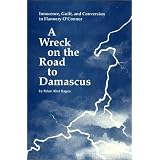
A ground-breaking study of Flannery O'Connor and her place in American culture, A Wreck on the Road to Damascus weaves together high art and popular culture in a way that makes literary criticism exciting. Drawing on a wide range of sources, Brian Abel Ragen shows not just the depth of O'Connor's religious vision, but also the ferocity of her attack on the literary tradition that at once denied original sin-her favorite doctrine-and shoved women to the margins of American culture. His work will change the way readers think about Flannery O'Connor, automobiles, original sin, and American culture.

Want to read more honest consumer review about A Wreck on the Road to Damascus: Innocence, Guilt and Conversion in Flannery O'Connor now ?

0 comments:
Post a Comment