Average Reviews:

(More customer reviews)In a nation where the mythology of freedom is so doggedly written in the minds and hearts of its citizens, an unusual gift and talent is required to see beyond the slogans of sublime intentions or constant political artifice. And to further have the courage to staple that vision or idea to the public bulletin boards, where it is sure to provoke harsh criticism from the many who will not be free enough in their minds and thoughts to begin to understand, is honorable.
Lock Step and Dance speaks to the contemporary context of bondage. It shows us the prisons we see and do not see by illuminating the inmates, the wardens, and the governors, and why they are and do what they do. In it we see the struggle for language and representation and the struggle for ownership of one's person.
The book ferries us aptly across a number of cultural enclaves, while explaining the author's position; however, even with the obvious affinity and knowledge shown for areas of Hip Hop, I would like to have seen the issues explored further still through her foray into this significant cultural explosion.
Lockstep and Dance, by examining the modern imprisonment of African American men, and the literal and the unseen "prison writ large," points to the way to make the reality of freedom closer to the cherished mythology. By examining the historical inhumanities of America, it opens us to greater possibilities of humanity. If we have the courage to read with open minds as the author has the courage to write, we may find a deeper meaning in a 21st century obligation to define ourselves as a species that improves upon our transgressions rather than a species that continues to live them out.
I think the book is right on the mark.
Click Here to see more reviews about:
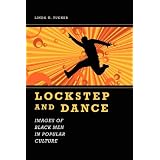
Lockstep and Dance: Images of Black Men in Popular Culture (Margaret Walker Alexander Series in African American Studies)Product Description: Lockstep and Dance: Images of Black Men in Popular Culture examines popular culture's reliance on long-standing stereotypes of black men as animalistic, hypersexual, dangerous criminals, whose bodies, dress, actions, attitudes, and language both repel and attract white audiences. Author Linda G. Tucker studies this trope in the images of well-known African American men in four cultural venues: contemporary literature, black-focused films, sports commentary, and rap music.
Through rigorous analysis, the book argues that American popular culture's representations of black men preserve racial hierarchies that imprison blacks both intellectually and physically. Of equal importance are the ways in which black men battle against, respond to, and become implicated in the production and circulation of these images.
Tucker cites examples ranging from Michael Jordan's underwear commercials and the popular Barbershop movies, to the career of rapper Tupac Shakur and John Edgar Wideman's memoir Brothers and Keepers. Lockstep and Dance tracks the continuity between historical images of African American men, the peculiar constitution of whites' anxieties about black men, and black men's tolerance of and resistance to the reproduction of such images. The legacy of these stereotypes is still apparent in contemporary advertising, film, music, and professional basketball. Lockstep and Dance argues persuasively that these cultural images reinforce the idea of black men as prisoners of American justice and of their own minds but also shows how black men struggle against this imprisonment.
 Get 15% OFF
Want to read more honest consumer review about Lockstep and Dance: Images of Black Men in Popular Culture (Margaret Walker Alexander Series in African American Studies) now ?