Average Reviews:

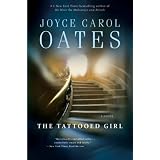
(More customer reviews)After September 11, 2001 many authors felt it necessary to respond in some way. But how? Joyce Carol Oates has chosen to write a novel, not about that historical event specifically, but about the nature of hate and evil. She chooses to concentrate this exploration in the intimate environment of a celebrated, reclusive writer named Joshua Seigl. He has reached a point in his life where he realises that he can no longer block the world out and needs human company. Searching for an assistant to help him organize his enormous body of work and attend to the menial chores of his large house, he encounters a drifter who calls herself Alma. Her body is covered in what may be scars, birthmarks or tattoos. Alma uses these mysterious marks on her body to fashion a personality for herself which can confront the uglier aspects of the world that her more sensitive self cannot combat. After hiring her there follows a working relationship in the intimate space of Seigl's house that unearths hidden aspects of both their identities. The unspoken antithesis that exists between them is built through months of a seemingly harmonious working relationship. Yet the hatred that exists between them is brought physically to the forefront by the exaggerated attitudes of Alma's dangerous, anti-Semitic lover Dmitri and Seigl's mentally unbalanced, passionately upper class sister Jet. Inevitably, the central characters own prejudices must come to the forefront where a tacit understanding is formed amidst tragic events.
The ultimate question this novel raises is: what place does art have in illuminating the past and dispensing with hatred? The answer is not as simple as it appears because fiction does not deal in truth. One can't help feeling that Oates herself is attempting to work out her own feelings over the matter in a heated argument toward the end of the novel where Joshua defends his writing:
"`Alma, I think of myself as writing stories for others. In place of others who are dead, or mute. Who can't speak for themselves.'"
This argument for the exhumation of buried events and people is the same that Oates has used in interviews to explain why she has written some novels such as Black Water and Blonde that reinvent historical situations. Alma's rebuttal is that he pretends to know these things, but doesn't actually know. However, one could argue that the point of fictional writing isn't to get at the "truth" but to convey an "idea" and in these "ideas" we discover the reality that has been hidden. The Tattooed Girl isn't a political novel in any obvious allegorical manner. It does, however, haunt your thoughts in the way it illuminates the divisions (economical, social, racial and religious) between people to such a startlingly intense degree. It is an incredibly important book that ought to be read now.
Click Here to see more reviews about: The Tattooed Girl: A Novel

Want to read more honest consumer review about The Tattooed Girl: A Novel now ?

0 comments:
Post a Comment