Average Reviews:

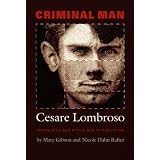
(More customer reviews)Though his theory of `the born criminal' is not likely to win many supporters today, Cesare Lombroso (1835-1909), an Italian physician and criminologist, is now widely considered one of the most important founders of criminology. His once widely popular ideas about how and why some people commit crimes were very influential in the 19th century Europe and America, and this book is the first critically annotated translation of the book which still gives a chance for an intriguing read and deeper understanding of the Western culture.
Lombroso's theory is based on the idea of `the born criminal,' certain group of possibly dangerous people marked by what he called `anomalies.' According to him, certain people who have particular physical traits are more likely to commit crimes than other `normal' people, and by carefully checking the bodies and faces of the criminals, including their cranial capacities or tattoos, Lombroso established his unique theory that sounds unusual today. He insists, for instance, "Nearly all the criminals have ... thick hair and thin beard." (p. 53) Today this crude statement would never be convincing.
In short 'Criminal Man' is an analysis of the nature of crime, a pseudo-science based on empirical data. Over the five editions of `Criminal Man' Lombroso developed his theory by accumulating data, articles, photos, and even the poems and drawings by the criminals, and he developed his theory with more categories and sub-categories added to his original idea, later covering the territories of prostitution, insanity, and even botany.
[ABOUT THE EDITIONS] The original book was first published in 1876, and this one-volume edition later expanded to the fifth edition (3 volumes and 1 atlas) in 1896-97. Instead of choosing one particular edition as the basis of the English translation, editors/translators Nicole Hahn Rafter and Mary Gibson made a sensitive decision. They divided their translation into five sections - EDITION 1, EDITION 2 ... and EDITION 5. The translated book's EDITION 1 includes every chapter of the first edition of the original book except for several chapters, which are postponed until their EDITION 2 section where they appear in fuller detail. The same pattern goes on until EDITION 5. According to the translators' notes, Lombroso never eliminated the older contents, and rarely revised them, so in this way the translation could keep the substance virtually intact, but within each chapter abridgement was done because of the numbers of the examples quoted by Lombroso, which they found too many.
The translation has all prefaces by Lomroso, notes by the editors, and the list of references. The book also has very useful glossary that explains the meaning and background of such words as atavism, physiognomy, positivism, recidivism, and others.
There is a "companion piece" titled "Criminal Woman, the Prostitute, and the Normal Woman" written by Lombroso and translated by Nicole Hahn Rafter and Mary Gibson.
Click Here to see more reviews about: Criminal Man
Product Description:
Cesare Lombroso is widely considered the founder of criminology. His theory of the "born" criminal dominated European and American thinking about the causes of criminal behavior during the late nineteenth century and the early twentieth. This volume offers English-language readers the first critical, scholarly translation of Lombroso's Criminal Man, one of the most famous criminological treatises ever written. The text laid the groundwork for subsequent biological theories of crime, including contemporary genetic explanations.Originally published in 1876, Criminal Man went through five editions during Lombroso's lifetime. In each edition Lombroso expanded on his ideas about innate criminality and refined his method for categorizing criminal behavior. In this new translation, Mary Gibson and Nicole Hahn Rafter bring together for the first time excerpts from all five editions in order to represent the development of Lombroso's thought and his positivistic approach to understanding criminal behavior.In Criminal Man, Lombroso used modern Darwinian evolutionary theories to "prove" the inferiority of criminals to "honest" people, of women to men, and of blacks to whites, thereby reinforcing the prevailing politics of sexual and racial hierarchy. He was particularly interested in the physical attributes of criminals-the size of their skulls, the shape of their noses-but he also studied the criminals' various forms of self-expression, such as letters, graffiti, drawings, and tattoos. This volume includes more than forty of Lombroso's illustrations of the criminal body along with several photographs of his personal collection. Designed to be useful for scholars and to introduce students to Lombroso's thought, the volume also includes an extensive introduction, notes, appendices, a glossary, and an index.

Want to read more honest consumer review about Criminal Man now ?

0 comments:
Post a Comment