Average Reviews:

(More customer reviews)Fascinating from start to finish. You can think of many reasons offhand why such a book would be endlessly captivating, but Gambetta will continually surprise you with the twists and turns in his subject.
Start with the obvious question: you're a criminal, and you want to communicate with your fellow-bad guys. How do you do it? That's intriguing on its own. If you know the other bad guy, you can vouch for him (or think you can -- see "Brasco, Donnie"). If you don't know him, you need to much more carefully apply the vetting that we use in the legit world: find someone you know who knows him, ask around about him, and so forth.
Obviously your big concern as an underworld fellow is the police. They're constantly trying to listen in on your communications, get fellow bad guys to turn state's evidence, and plant undercover cops in your midst.
When your organization reaches a certain level of success and infamy -- think of the Mafia here -- you now have a brand to protect. Rival organizations start claiming your name to strike fear into their enemies' hearts. To avoid brand dilution, you need to make sure that only those people who are actually in the Mafia say they're in the Mafia. Trademark law isn't going to protect you here, so you need to enforce your own brand.
And how do your establish your bona fides as a bad guy? One intensely fascinating thread in Codes to the Underworld has to do with commitment strategies: imposing some heavy cost on yourself -- some cost that absolutely no one outside the Mafia (or whichever group) would ever think of faking. Henry Farrell, over at Crooked Timber, excerpts one amazing bit on this score:
Erefaan's face is covered in tattoos. "Spit on my grave" is tattooed across his forehead; "I hate you, Mum" etched on his left cheek. The tattoos are an expression of loyalty. The men cut the emblems of their allegiance into their skin. The Number [the name of the hierarchical system in Pollsmoor prison] demands not only that you pledge your oath verbally, but that you are marked, indelibly, for life. Facial tattoos are the ultimate abandonment of all hope for a life outside.
Gambetta has spent decades studying the Italian mafia. He's a brilliant economic naturalist, with story upon story from the world out there. He's a gripping writer, to boot. Codes of the Underworld is one of the few works of economics that you'll be unable to put down. This may be because it's not recognizable, at first glance, as a work of economics. But its economic cred is pristine; it's filled with references to the great Thomas Schelling. Highly recommended, both for those who love economics and those who love The Godfather.
(I'd be remiss here if I didn't mention, by the way, Schelling's Micromotives and Macrobehavior. It's an boundlessly interesting piece of work.)
Click Here to see more reviews about: Codes of the Underworld: How Criminals Communicate
Product Description:
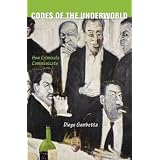
How do criminals communicate with each other? Unlike the rest of us, people planning crimes can't freely advertise their goods and services, nor can they rely on formal institutions to settle disputes and certify quality. They face uniquely intense dilemmas as they grapple with the basic problems of whom to trust, how to make themselves trusted, and how to handle information without being detected by rivals or police. In this book, one of the world's leading scholars of the mafia ranges from ancient Rome to the gangs of modern Japan, from the prisons of Western countries to terrorist and pedophile rings, to explain how despite these constraints, many criminals successfully stay in business. Diego Gambetta shows that as villains balance the lure of criminal reward against the fear of dire punishment, they are inspired to unexpected feats of subtlety and ingenuity in communication. He uncovers the logic of the often bizarre ways in which inveterate and occasional criminals solve their dilemmas, such as why the tattoos and scars etched on a criminal's body function as lines on a professional resume, why inmates resort to violence to establish their position in the prison pecking order, and why mobsters are partial to nicknames and imitate the behavior they see in mafia movies. Even deliberate self-harm and the disclosure of their crimes are strategically employed by criminals to convey important messages. By deciphering how criminals signal to each other in a lawless universe, this gruesomely entertaining and incisive book provides a quantum leap in our ability to make sense of their actions.
 Get 18% OFF
Want to read more honest consumer review about Codes of the Underworld: How Criminals Communicate now ?

0 comments:
Post a Comment