Average Reviews:

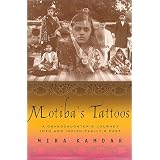
(More customer reviews)Mira Kamdar's family biography is the heart-warming and lovingly told tale of multiple generations of the Kamdar-Khara families. Beginning in the early twentieth century, in the small Kathiawar village of Gokhlana, we follow the lives and loves of this extended Jain family to the close of the twentieth century. Along the way we are allowed to share in the Kamdar-Khara families `adventures' and `mishaps', as a story that begins in the simple Gujarati villages of Kathiawar takes us on an enchanting journey through Rangoon and Bombay, ending in the vast suburban metropolises of the United States of America.
At the heart of the story lies Motiba, grandmother of the author, a simple lady steeped in the fine traditions of Kathiawari-Jain culture, and witness to all the dramas that have shaped the lives of her large extended family through the twentieth century. Mira Kamdar beautifully brings to life Motiba's world as a young Jain girl growing up in the deeply traditional Jain villages of Kathiawar. Through Mira's retelling of the anecdotes of older family members, especially Motiba, we learn about the lives of Jain women in the early part of the century: How they lived, their position in society, the role of religion in the Jain village and the impact of the British and Mahatma Gandhi upon this pre-modern world.
As the century moves on, the action switches to the British imperial possession of Burma and the cities of Akyub and Rangoon where many members of the Kamdar-Khara families, like other Indians, travelled in search of business opportunities and the hope for a more prosperous existence. Perhaps because the story of the Indian Diasporas in Burma is not as well known and documented as other Indian Diasporas experiences, the story of the Jain community in Burma is one of the most fascinating parts of the entire narrative. Here we discover how young Jain settlers in Burma built businesses and created new lives for themselves and their families and then saw it all swept away after the Japanese invasion during the Second World War and the consequent ethnic conflicts that gripped post-independence Burma. The poignancy of this section of the story is only heightened by Mira's interviews with the remnants of the once strong Indian community in Rangoon.
But wherever Mira Kamdar's story takes us, and it proceeds to take us to Bombay, Oregon and Los Angeles, a number of overarching themes dominate the book. Firstly, how the descendants of turn-of-the-century Kathiawari-Jain families attempted to preserve and adapt their Jain identity in a modern and, more importantly, non-Jain world. We are witness to the struggles of Motiba's eldest son, Prabhakar or `Pete' as he is known in America, as he attempts to cope with life after emigrating to America and how both he and his family cope with his marriage to a white American girl from Oregon and the status of Prabhakar's children's as perceived half-castes. Secondly, we see how the impersonal forces of history interact with people's personal choices to shape their lives as well as the lives of the generations to follow. Whether it be the ravages of the Second World War, the Cold war or the Indian independence struggle the fate of this Jain family has been touched by external events. But Mira never lets the `external' dominate her narrative; instead she weaves the major events of the century into the fabric of her story whilst preserving the primacy of her chronicle as a family biography.
The people and lives that Mira Kamdar has so affectionately described are not the lives of Maharajas, celebrated Indian independence fighters or Indian industrial magnates: There are no Nehrus, Tatas or Tagores amongst the Kamdar-Khara clan. But this, paradoxically, is the source of the very richness and beauty of Mira Kamdar's story. Mira Kamdar is telling the story of one Jain-Kathiawar family and how it has navigated the twentieth century. But this family is similar to hundreds and thousands of other Jain families who began the century in the pre-modern villages of Gujarat and who ended the century in the cosmopolitan cities of New York, Chicago, Toronto, London and Singapore. And this takes us to the heart of this book: How we, the younger generation of Jains, have a tendency to look at our silver-haired parents and grandparents and dismiss, or at the least never enquire, into their lives and experiences. We lose so much that sits just in front of us if we forget that our older relatives have lived fascinating lives, very different from our own, and have often made extraordinarily brave and difficult decisions to leave their homeland in search of a new future of which we are the ultimate beneficiaries.This then is the true joy of Mira Kamdar's book, reminding us all that within our own families are those who have lived through a history very different to our own and that we have much to discover by sitting down and learning from them and drawing upon their rich experiences and wisdom.
Jay Sheth
Click Here to see more reviews about: Motiba's Tattoos: A Granddaughter's Journey into her Indian Family's Past

Want to read more honest consumer review about Motiba's Tattoos: A Granddaughter's Journey into her Indian Family's Past now ?

0 comments:
Post a Comment